

GMRS - Can You Talk on a Two-Way Radio Across 100 Miles?

“My kid is camping over 100 miles away. Is there a two-way radio we can use to stay in touch?”
The short answer is not easily, not cheaply and definitely not right out of the box.
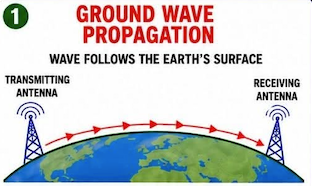
At 100 miles, the Earth's curvature and rugged terrain stand directly in your path. Standard handheld consumer radios rely on direct line-of-sight. Bridging that distance without commercial cellular networks requires specialized frequencies, linked infrastructure, or satellite uplinks.
Pinewood Lake GMRS Repeater
Many of us rely on our Pinewood Lake Pole Hill repeater to stay connected across the neighborhood. In rugged terrain, a repeater like ours is indispensable, it takes a weak signal from a handheld down in a valley, amplifies it from a high peak, and broadcast it over surrounding ridges.
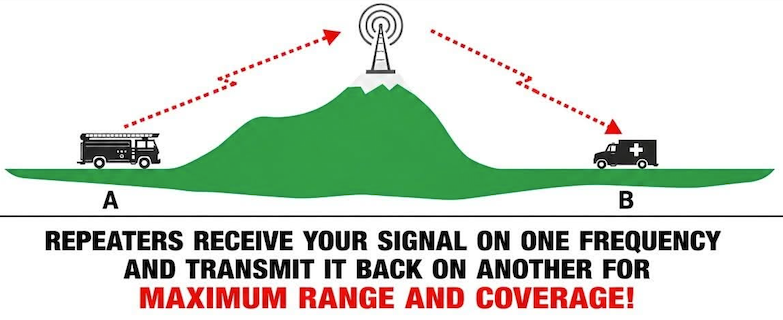
However, GMRS (General Mobile Radio Service) has a hard regulatory limit: FCC rules strictly prohibit linking GMRS repeaters together over the internet or private networks. Our repeater solves blind spots across our local footprint, but it legally cannot hand off your signal to another repeater 100 miles away. Once you travel outside the coverage area, contact drops.
The "Nationwide Walkie-Talkie" Trap (PoC Radios)
Searching online for long-range radios inevitably leads to ads for brands like Rapid Radios promising "unlimited nationwide range."
These devices use Push-to-Talk over Cellular (PoC). They are cellular phones repackaged inside a rugged walkie-talkie shell, using internal multi-carrier IoT SIM cards.
The Catch: While they can switch between carriers like Verizon, AT&T, and T-Mobile, they still require a physical cellular tower. If your camper pitches a tent in a backcountry canyon with no cell reception from any carrier, the radio is an expensive paperweight.
The Cost: Also, they require ongoing subscription renewals after the first year. If you have cell service, use your phone.
What About CB Radio?
Citizens Band (CB) operates down at 27 MHz close to the 10 meters Ham Radio band without requiring an exam. While typical ground-wave range is limited to 5 to 15 miles, CB radios equipped with Single Sideband (SSB) can occasionally bounce signals off the ionosphere, a phenomenon known as "skip."
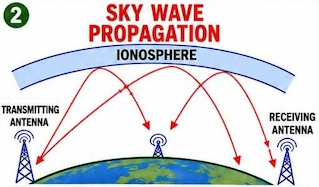
The problem is reliability. Atmospheric skip depends on solar activity and shifting atmospheric layers. You might talk to someone 800 miles away in another state by accident at 2:00 PM, but completely fail to reach your son 100 miles away for a planned 7:00 PM check-in.
Commercial & Satellite Alternatives
If you want reliable long-range communication outside the amateur radio bands, you are limited to commercial hardware:
Dedicated Satellite Messengers (Garmin inReach, ZOLEO): The gold standard for casual backcountry peace of mind. They bypass ground towers completely, sending two-way text messages, GPS coordinates, and SOS alerts via low-Earth-orbit satellite networks. They require a monthly subscription, but they work anywhere with an open view of the sky.
Satellite Push-to-Talk Handsets: Devices like the Iridium Extreme PTT deliver true, real-time voice over satellite from anywhere on the planet. However, the handsets cost well over $1,000, and airtime plans run steep monthly fees—making them impractical for recreational camping.
Commercial Land Mobile Radio (Part 90): Mining outfits and utilities link private repeaters across mountain ranges using leased microwave links. This requires commercial FCC licenses, expensive commercial-grade radios, and recurring tower fees.
The Amateur Radio Solution (Zero Monthly Fees)
Ham radio is the only platform that allows you to engineer your own 100-mile link without monthly subscriptions or commercial gatekeepers.
Linked VHF/UHF Repeaters: Unlike GMRS, amateur radio operators are legally allowed to link mountaintop repeaters across entire regions. Systems like the Rocky Mountain Ham Radio (RM Ham) microwave network connect dozens of repeaters across Colorado and New Mexico. By hitting a local linked machine near home, your transmission travels through mountaintop microwave relays to repeaters over 100 miles away. Your son just needs to be camping within 15 to 20 miles of one of those network nodes.

High Frequency (HF) Skywave: If you want true grid-down communication without relying on towers or repeaters, HF radio (operating on bands like 40m or 80m) is the answer. Using techniques like NVIS (Near Vertical Incidence Skywave), HF radios bounce radio waves directly up into the ionosphere to rain back down over surrounding mountain ranges.
HF portable operating has grown into a massive outdoor subculture through programs like POTA (Parks on the Air) and SOTA (Summits on the Air), where operators hike lightweight transceivers, wire antennas, and small lithium batteries up peaks to make contacts across the country.
If your priority is a plug-and-play backcountry safety tether to text "I set up camp, see you Sunday," pick up a satellite messenger like an inReach. But if you and your son want an engaging hobby that teaches hands-on radio theory and unlocks true, license-based backcountry independence, studying for your amateur radio tickets together is where the adventure really begins.
The Northern Colorado Amateur Radio Club, based in Loveland, CO, offers free Amateur Radio License Exams, or there are several Ham Radio operators in our neighborhood who would be happy to help you find your way into a hobby that lasts a lifetime.
Pete R.
WRZY838, W0RCR


Comments